Move freight forward with confidence
Your team already knows how to run a reliable operation. IntelliTrans gives them the clarity, tools, and support to do it with greater confidence and control.












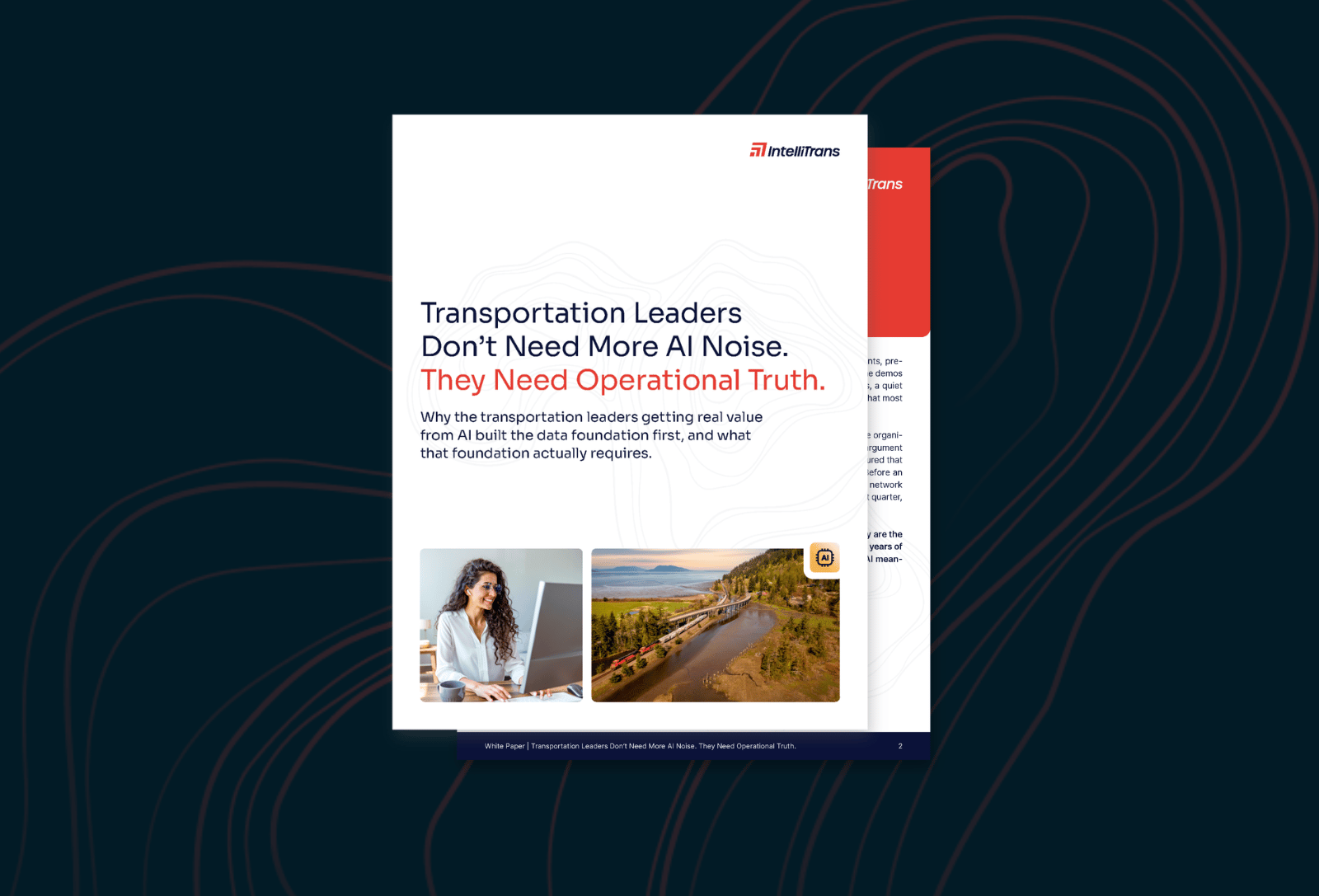
Billing errors that pass without a match. Demurrage charges that can't be disputed. Weight discrepancies with no paper trail. This paper examines where the exposure lives and what it takes to close it.


The freight fraud headlines describe phantom carriers and hijacked loads. That's real, but it's not the version of loss that bulk and break-bulk shippers face most often. Their exposure is different, and in many ways more expensive.
A railcar of industrial chemicals moves from a Gulf Coast plant to a Midwest distribution facility. The origin weight goes on a paper ticket at the scale house. The seal number gets noted by the loading crew. The car travels through two railroad interchanges. Three weeks later, a demurrage invoice arrives. The logistics coordinator doesn't have access to the car's real-time movement history. She can't confirm when it arrived or how long it sat. By the time anyone pulls the records, the dispute window has closed. The charge gets paid. No one ever knows if the numbers matched.
That scenario isn't rare. It's the operating condition at a significant number of mid-market bulk shippers. And the problem isn't a bad carrier or a dishonest vendor. It's that the data behind the shipment, what was weighed, sealed, received, and billed, never came together in a single place where it could be checked.
The white paper argues that the most significant financial exposure in bulk shipping is not cargo theft. It's leakage enabled by fragmented data. In a market where a single railcar of copper can exceed $900,000 in value, the gap between what happened and what can be documented is not a minor inefficiency. It's a material risk. And the organizations closing it first are running a data discipline program, not a fraud response program.