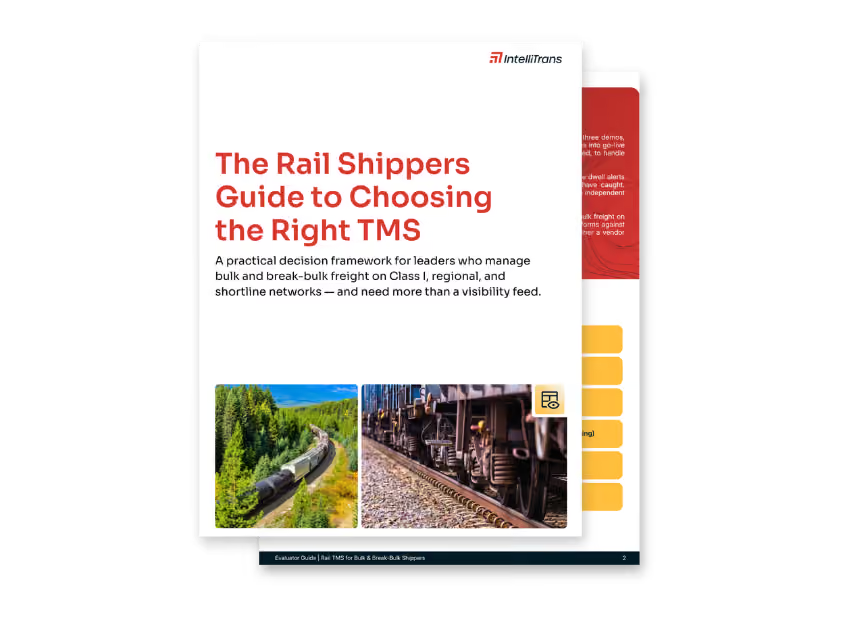
How to evaluate, select, and implement the right rail TMS for bulk freight

A practical guide to evaluating rail TMS software for bulk and break-bulk freight operations. Learn what a rail TMS actually does, how to build your requirements, and what separates purpose-built platforms from generic alternatives.

What is a rail TMS, and why does it matter for bulk shippers?

A rail TMS helps shippers plan, execute, track, and settle freight on Class I, regional, and shortline networks. For bulk shippers, that means railcar visibility, fleet sizing, demurrage exposure, invoice validation, and dispute documentation.
38%
of North American bulk rail freight moves through operations we support
30+
years in bulk freight operations
$150K - $2.5M
per hour lost when a missing or delayed railcar forces an unplanned production shutdown

Where does your rail operation stand today?

Before comparing vendors, understand your own starting point.

These six dimensions surface where your current situation is creating cost or risk you may not be tracking closely.

Rail visibility

Portal-by-portal checks vs. real-time status across all carriers

Financial exposure

Manual invoice review vs. automated matching before payment

Demurrage exposure

Finding out weeks later vs. 48–72 hours before free time expires

Team capacity

Gathering data manually vs. managing by exception with proactive alerts

Lease & maintenance

Spreadsheets and repair emails vs. integrated tracking with alerts

Fleet sizing

Experience-based estimates vs. data-driven scenario modeling

The five criteria that separate purpose-built from configured

These are structural tests, not feature checklists. They reveal whether a platform was designed for bulk rail operations or adapted from a different freight category.
1
Rail capability: built in, not bolted on
Independent system of record, native EDI/BOL/yard/mobile, Class I and regional integration depth
2
Execution, not just visibility
Act on exceptions from within the platform, 48–72 hours before free time expires
3
Financial accuracy built into rail operations
Automated matching with rail-specific accessorial depth, dispute workflow in-platform
4
Configurability without IT dependency
Self-service demurrage thresholds, car assignment rules, BOL config — no service tickets
5
Implementation and managed services built for rail
Bulk rail operations expertise, not generic TMS onboarding

The full evaluator's guide includes the complete scoring rubric for each criterion, with specific language anchored to what vendors demonstrate, not just describe.

What this means for your commodity

Agriculture

Harvest-window visibility, covered hopper fleet sizing

Chemicals

STCC-specific dwell alerts, hazmat compliance handoffs

Metals

Gondola cycle time, rail-specific accessorial review

Forestry & paper products

OD permit pre-qualification, detention at receiving mills

Energy

DOT-117 compliance before tendering, refinery sequencing

Mining & aggregates

Fleet utilization by facility, mobile yard access

Building the internal business case

Cost reduction
Quantify last year's demurrage, detention, and accessorial spend. What percentage arrived after the fact with no ability to intervene?
Risk mitigation
A missed production window costs $150K–$2.5M per hour. One real example from your operation carries more weight than any feature comparison.
Team capacity
Manual rail work is done by your most experienced people. A TMS returns their attention to decisions only they can make.
GET THE COMPLETE GUIDE

The Rail TMS Evaluator's Guide for bulk and break-bulk shippers

Five criteria with scoring rubric, eight red flags, commodity-specific lens, vendor scoring worksheet, and the full business case framework for executive approval.

Our latest blogs

How predictive intelligence helps bulk shippers stay ahead of rail disruption
Blog
Jul 6, 2026
Podcast | Rail logistics management: why having the data isn't enough
Blog
Jun 19, 2026
Rail demurrage charges: why they cost more than your invoices show
Blog
Jun 9, 2026

Move freight forward with confidence

Simplify complex logistics. Strengthen control. Keep your rail operations running on time, every time.